

If you’re seeking mental health treatment for yourself or someone you love, the first big question often isn’t what kind of therapy—it’s what level of care. Should you start with outpatient sessions? Or is it time for something more structured, like residential treatment?
There’s no universal answer—but there are clear differences between outpatient and residential treatment. Understanding them can help you make an informed, compassionate decision.
At Amend Treatment, we offer both residential care and intensive outpatient programming (IOP) and we often help clients decide which path best fits their current needs. Here’s what you need to know.
What Is Outpatient Mental Health Treatment?
Outpatient care typically involves seeing a therapist, psychiatrist, or support group on a scheduled basis while continuing to live at home. It may include:
- Weekly or biweekly individual therapy
- Group therapy or support groups
- Psychiatric care and medication management
- Intensive Outpatient Programs (IOPs), which meet multiple days per week
Outpatient care is a great fit for individuals who are stable, functioning day-to-day, and able to engage with treatment while managing work, school, or family life.
What Is Residential Mental Health Treatment?
Residential care is a higher level of support. Clients live on-site in a safe, home-like setting and participate in a full-time therapeutic program—usually for 30 to 60 days.
At Amend, residential treatment includes:
- Daily individual and group therapy
- Trauma-informed modalities like EMDR, IFS, and somatic therapy
- Nervous system regulation and mindfulness practices
- Nutrition, sleep, and lifestyle support
- Creative expression, nature time, and peer connection
- 24/7 access to emotional support in a contained environment
It’s designed for individuals who need deeper healing, more structure, or a break from stressors and triggers that make recovery harder at home.
Key Differences Between Outpatient and Residential Care
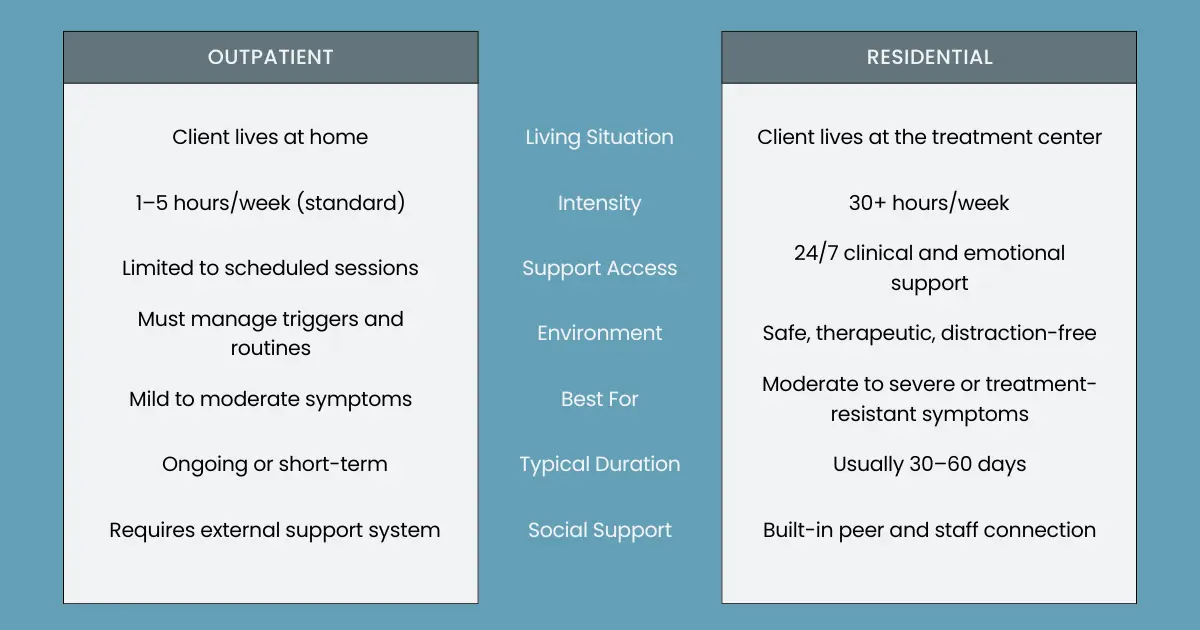
When Outpatient Care May Be Enough
Outpatient care may be the right fit if:
- You’re generally stable and functioning day to day
- You’re not in active crisis or at risk of self-harm
- You’re seeking support for stress, mild anxiety, life transitions, or relationship issues
- You’re stepping down from a higher level of care and need continued support
- You have a strong support system at home and can maintain routines
When Residential Care May Be Necessary
You may want to consider residential treatment if:
- You’re experiencing daily panic attacks, severe depression, or emotional dysregulation
- You’ve tried outpatient therapy or medication and aren’t getting better
- Trauma is part of your story and traditional therapy isn’t reaching it
- You’re cycling through crashes, relapses, or shutdowns
- Daily responsibilities feel overwhelming or impossible to manage
- You need a break from your environment to reset your nervous system and re-engage with life
How Amend Treatment Offers Both
At Amend, we provide a continuum of care—which means we meet you where you are and walk with you through what comes next.
Residential Program
Designed for clients who need immersive support to stabilize, process trauma, and begin deep healing in a private, supportive environment.
Intensive Outpatient Program (IOP)
Ideal as a step-down from residential or a primary treatment option for those who need more than weekly therapy but don’t require 24/7 support. IOP includes:
- Group therapy multiple days per week
- Individual therapy and psychiatric care
- Nervous system and trauma regulation tools
- Virtual and in-person options available
We’ll help you determine which path is right—now, and over time.
Frequently Asked Questions About Outpatient vs. Residential Treatment
Can I start in outpatient care and move to residential later?
Yes. Many clients begin with outpatient support and transition to residential when they realize they need more structure or support to make lasting progress.
What if I’m not sure which level of care I need?
Our clinical team can help you assess your needs, history, and goals. We often begin with a conversation and explore both short- and long-term options together.
Is residential treatment only for severe cases?
Not at all. Many people come to residential care not because they’re in crisis—but because they’re stuck, burned out, or unable to heal in their current environment.
Can I go back to outpatient therapy after residential?
Yes. We coordinate closely with outpatient providers and offer our own IOP programs to support ongoing healing after discharge.
Is IOP different from standard outpatient care?
Yes. IOP includes multiple therapy hours per week, often across multiple days, and offers more structure and group support than standard 1x/week therapy.
You Don’t Have to Figure This Out Alone
Whether you’re leaning toward outpatient care, wondering if you need residential support, or simply looking for clarity, we’re here to help.
📞 Call today to talk with our admissions team
🔍 Verify Your Insurance Benefits
We’ll help you find the right level of care—for where you are now, and where you want to go next.